
Dr. Ara J. Deukmedjian, MD
Board Certified Neurosurgeon
Published: September 30, 2026
Medical Disclaimer: Information and statements contained herein are for informational and educational purposes only and do not constitute a medical consultation, diagnosis or treatment recommendation. Consult a qualified medical practitioner regarding any questions with regards to your health.
Key Points
✓ Chronic pain in the shoulder joint. The chronic pain in the shoulder joint upon lifting or elevating the arm is caused by conditions such as arthritis, rotator cuff deterioration, and bursitis.
✓ Approximately 1 in 5 individuals expresses dissatisfaction with reverse total shoulder replacement, with published satisfaction rates of 77.7% to 87.8%. ¹
✓ Some of the risks associated with shoulder replacement surgery include infection, loosening of the implants, blood flow of metals, nerve injury, and instability. ², ³, ⁴
✓ There are reports of 36% complications and 23% revisions within ten years for reverse total shoulder arthroplasty (rTSA). ⁵
✓ There are cases of ongoing opioid consumption among around 14–16% of opioid-naïve patients undergoing shoulder replacement surgery, and pre-op opioids increase the chances of developing dependence on opioids. ⁶, ⁷
✓ Deuk Plasma Rhizotomy® is a minimally invasive, FDA-cleared alternative for shoulder joint pain relief that targets only the pain-carrying nerves. The joint is never opened or replaced.
Reaching for a seatbelt. Lifting a grocery bag into the trunk. Rolling onto your side at night and being jolted awake by a deep, unrelenting ache. For millions of Americans, chronic shoulder joint pain quietly reshapes daily life until pain controls your life. When medications, injections, and physical therapy stop working, most patients are told the same thing: it’s time for a shoulder replacement.
But shoulder arthroplasty is not the routine, low-risk operation it is often made out to be. It is a major surgery with a long recovery, real complications, and a dissatisfaction rate that patients are rarely told about upfront. ¹
For anyone living with pain in the shoulder joint. From arthritis or years of wear and tear. The idea of having the natural joint carved out and replaced with metal and plastic hardware is unsettling. What if the pain could be eliminated without replacing your shoulder?
That is exactly what Deuk Plasma Rhizotomy® was designed to do. It is a patented, ultra-minimally-invasive, FDA-cleared treatment for chronic shoulder joint pain and it is changing how the condition is managed at every stage.
What Causes Shoulder Joint Pain?
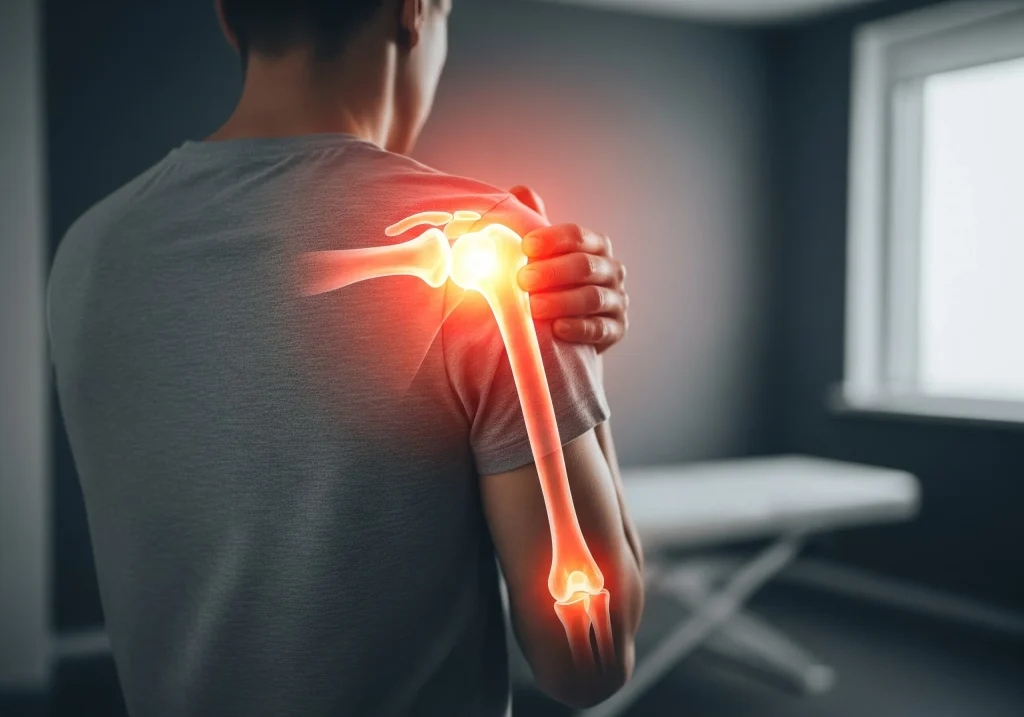
Understanding what is actually driving your pain matters, because the right treatment depends on the source. The vast majority of chronic shoulder joint pain. Whether it’s left shoulder joint pain, right shoulder joint pain, or both. Traces back to one of a few underlying conditions:
- Shoulder osteoarthritis. Cartilage breakdown between the humeral head and the glenoid produces grinding, stiffness, and a deep aching pain. Often worse with movement and at night.
- Rotator cuff degeneration or tears. Years of overhead use, or acute injury, wear down the tendons that stabilize the shoulder. The classic symptom: pain in the shoulder joint when lifting the arm or reaching overhead, sometimes with visible weakness.
- Bursitis and impingement. Inflamed bursa and pinched tendons produce sharp, catching pain when raising the arm or reaching behind your back.
- Post-traumatic arthritis. An old fracture, dislocation, or surgery can accelerate joint wear years later.
How to Tell If Shoulder Pain Is Muscle or Joint
A useful rule of thumb: muscle-related shoulder pain typically improves with rest, warms up with movement, and responds well to stretching and short courses of anti-inflammatories. Joint pain from arthritis or advanced rotator cuff disease tends to do the opposite. It gets worse with activity like lifting or raising the arm, it hurts more at night when you’re not moving, and it doesn’t resolve with rest, heat, or ice. Grinding, catching, weakness, and pain that radiates down the upper arm all point toward the joint itself. An MRI is the fastest way to know for sure.
What Is Deuk Plasma Rhizotomy®?
Deuk Plasma Rhizotomy® is a patented outpatient technique invented by neurosurgeon Dr. Ara Deukmedjian. Using a precision plasma wand passed through a single 4mm opening, the specific nerves that carry pain signals from the arthritic shoulder joint are permanently deactivated. The joint itself: the humeral head, the glenoid, the rotator cuff, the capsule. Is never opened, cut, drilled, or replaced.
Unlike traditional heat-based radiofrequency ablation, the plasma technology used at Deuk Joint operates at much lower temperatures. That precision protects surrounding tissue, preserves the joint’s natural anatomy, and leaves full shoulder motion intact. Nothing is implanted. Nothing is removed. The only thing that changes is that the pain signal is shut off.
The Problem With Shoulder Replacement Surgery
Total shoulder arthroplasty either anatomic (aTSA) or reverse (rTSA). Involves removing the diseased surfaces of the humeral head and glenoid and replacing them with metal and plastic components, typically fixed in place with bone cement or press-fit into the bone. It requires a 4–6 inch open incision, general anesthesia, a 1–3 day hospital stay, and a rehabilitation process that stretches over many months.
The literature on patient satisfaction is sobering. A systematic review published in the Journal of Shoulder and Elbow Surgery found that overall satisfaction after reverse total shoulder arthroplasty ranged from just 77.7% to 87.8% depending on the outcome measure used. ¹ That means roughly 1 in 5 patients sometimes walk away disappointed, either because their pain never fully resolved, because their function did not return to expectations, or because complications derailed their recovery.
Complications of Shoulder Replacement Most Patients Aren’t Told About
Shoulder replacement is frequently framed as a straightforward, predictable procedure. The peer-reviewed literature tells a more complicated story.
Infection (Periprosthetic Joint Infection)
Deep infection around the shoulder replacement is called periprosthetic joint infection (PJI). It is among the most serious complications in the world of joint surgery. A study of a huge database in the Journal of Shoulder and Elbow Surgery indicated complication rates of 10.7% for anatomic TSA and 8.9% for reverse TSA, with revision rates of 5.6% and 2.5%, respectively. ² Registry results for many years are much scarier: a systematic review of rTSA with at least 10 years of follow-up revealed a 36% complication rate and a 23% revision rate due to infection and instability. ⁵
Once infection sets in around a shoulder implant, the treatment cascade is brutal. Repeat surgeries, prolonged IV antibiotics, temporary spacer placement, and in some cases removal of the prosthesis altogether. Revision shoulder replacement carries roughly 3.5-times higher odds of wound infection compared with primary surgery. ³
Implant Loosening
Just like a hip or knee replacement, a shoulder implant is not permanent. Over time, small amounts of debris from the articulating surfaces trigger an inflammatory reaction in the surrounding bone. That reaction gradually loosens the bond between the prosthesis and the bone it was fixed into. Loosening produces pain, mechanical instability, and eventually implant failure that requires revision surgery. Aseptic loosening consistently ranks among the leading causes of long-term shoulder replacement failure in the published literature. ⁵
Metal Fragments From the Implant (Metallosis)
When the metal and polyethylene components of an artificial joint move against each other, microscopic metal particles are shed into the surrounding tissue and, in some cases, into the bloodstream. This process is metallosis which causes local inflammation, bone destruction, and staining of the surrounding tissue. ⁴
This is not just a local problem. Emerging research has raised serious concerns about the systemic effects of cobalt and other metals released from joint implants. A 2025 systematic review in Archives of Orthopaedic and Trauma Surgery linked cobalt toxicity from metal implant debris to neurological impairment and cognitive decline. A category of complication that is still not part of routine post-arthroplasty monitoring guidelines. ⁸ A separate study of post-mortem brain tissue found elevated cobalt and titanium concentrations in patients with joint replacements, with both metals associated with amyloid plaque formation. ⁹
Nerve Injury and Instability
The shoulder is surrounded by a dense network of critical nerves. The axillary, suprascapular, and brachial plexus branches that must be protected during any open shoulder surgery. Despite meticulous technique, nerve injury remains a documented risk of shoulder arthroplasty. One large analysis of reverse total shoulder arthroplasty reported a nerve injury rate of roughly 1.3%, more than doubling in revision cases. Instability from the shoulder implant dislocating or subluxing. Is also among the most frequent complications, appearing in up to 9% of long-term rTSA cases. ⁵
Persistent Pain and the Reality of Revision
Perhaps the most heartbreaking outcome is a shoulder replacement that fails to actually relieve pain. Even when the implant is technically well-positioned and radiographically stable, a meaningful minority of patients report ongoing shoulder joint pain years after their surgery. And when a shoulder replacement fails, the fix is another, more complex operation with higher infection rates, worse functional outcomes, and lower satisfaction than the primary procedure. ³
The Pain Medication Cycle: Why More Surgery Isn’t the Answer
Most patients with shoulder arthritis follow a familiar and frustrating path: over-the-counter anti-inflammatories, then prescription NSAIDs, then cortisone injections, then physical therapy and when those fail, surgery is offered as the inevitable last resort. But the surgery itself often creates a new problem: chronic opioid dependence.
A retrospective cohort study of opioid-naive patients undergoing total joint arthroplasty found persistent opioid use in 12–14% of shoulder replacement patients at one-year follow-up, comparable to knee and hip replacement rates. ⁷ Another investigation found that preoperative opioid use raised the odds of continued opioid use at one year by more than 40-fold and more than doubled the odds of persistent pain. ⁶
For patients already using opioids before surgery often prescribed by well-meaning physicians managing their arthritis. The trajectory is even worse: higher postoperative pain scores, higher opioid consumption, lower satisfaction, and diminished long-term outcomes. ⁶
When a shoulder replacement fails, the answer offered is usually more surgery revision arthroplasty; which comes with substantially higher rates of infection, complications, and functional compromise. ³ It is an escalating cycle: pills, then surgery, then more pills, then more surgery. Deuk Plasma Rhizotomy® was designed to step off that escalator entirely.
What A Patient Has To Say About The Deuk Plasma Rhizotomy®
The Deuk Plasma Rhizotomy® procedure operates on a completely different philosophy than shoulder replacement. Rather than removing the shoulder and substituting artificial hardware, it eliminates the pain at its neurological source. The tiny sensory nerves that carry pain signals from the shoulder to the brain.
Here is what the process looks like from a patient’s perspective:
Step 1: Free Consultation and MRI Review. The process begins with a no-cost review of your existing shoulder MRI. Dr. Deukmedjian and his team identify the specific pain-carrying nerves branching around the shoulder joint and confirm whether you are a candidate for either left shoulder joint pain, right shoulder joint pain, or both. No office visit is required to get started. Patients from anywhere in the country can begin remotely.
Step 2: The Outpatient Procedure. Performed under light twilight sedation not general anesthesia. Dr. Deukmedjian makes a single 4mm opening (smaller than a pencil eraser) and inserts the patented plasma wand. Precision plasma energy destroys the targeted pain nerves while the surrounding joint capsule, rotator cuff, cartilage, and bone remain completely untouched. The incision is closed with a small adhesive and covered with a Band-Aid.
Step 3: Home the Same Day. Recovery takes about one hour. There is no hospital admission, no general anesthesia, no sling for weeks, and no opioid prescription to fill. Most patients return to normal light activity the very next day.
No implant. No hardware. No opioids. The operation removes just the nerve endings that produce the pain while preserving the joint in its entirety. Nothing needs to be tightened, nothing metallic sheds particles into your bloodstream, nothing artificial can become infected, and no opiates are necessary in your healing process. Your own shoulder remains exactly where it belongs.
Deuk Plasma Rhizotomy® vs. Shoulder Replacement: A Side-by-Side Comparison
Who Is a Candidate for Deuk Plasma Rhizotomy®?
You may be a strong candidate if any of the following apply:
- A physician has recommended shoulder replacement and you want to explore a less-invasive option first.
- You have chronic shoulder joint pain from arthritis, rotator cuff degeneration, or degenerative joint disease that has not responded to medications, injections, or physical therapy.
- You experience persistent pain in the shoulder joint when lifting or raising your arm.
- You want to avoid the hardware, hospitalization, and long recovery of joint replacement.
- You have already had a shoulder replacement that failed to relieve your pain.
The fastest way to know for sure is a free MRI review. If Deuk Plasma Rhizotomy® isn’t the right answer for your shoulder, you remain a full candidate for shoulder replacement at any point in the future.
The Bottom Line
Shoulder replacement is a major operation with real, documented risks: infection, implant loosening, metal debris in the bloodstream, nerve injury, instability, persistent post-surgical pain, and long-term opioid dependence. For many patients, those risks can be avoided entirely.
Deuk Plasma Rhizotomy® is a fundamentally different solution for shoulder joint pain relief. It does not touch the shoulder joint; it addresses the pain. The procedure takes place on an outpatient basis under twilight sedation through a single 4mm incision. There is no implant, no hospital stay, no general anesthesia, and no opioid prescription. Average pain reduction is 85%, and most patients are back to their normal routines the next day.
At Deuk Joint, the emphasis is not on joint replacement. It is on joint preservation. The procedure was developed by Dr. Ara Deukmedjian, a board-certified neurosurgeon with more than 20 years of experience, out of a conviction that patients deserve a better option than surgically removing a natural joint. If you or someone you love has been told that shoulder replacement is the only option for chronic shoulder joint pain, there is another path worth exploring first.
Keep Your Shoulder.
Lose the Pain.
Deuk Plasma Rhizotomy® shuts off chronic shoulder pain at the nerve — the joint is never opened. An outpatient procedure with no implant, no general anesthesia, and no opioids.
FAQ
What causes shoulder joint pain?
Answer
Most chronic shoulder joint pain traces back to shoulder osteoarthritis, rotator cuff tears or degeneration, bursitis with impingement, or post-traumatic arthritis from an old injury. Less commonly, it stems from adhesive capsulitis (frozen shoulder), fractures, or referred pain from the neck. An MRI is the most reliable way to identify the exact source.
How can you tell if shoulder pain is muscle or joint?
Answer
Muscle-related shoulder pain usually eases with rest, responds to stretching, and improves within days. Joint-related pain from arthritis or advanced rotator cuff disease tends to worsen with lifting or raising the arm, hurts more at night, and does not resolve with rest. Grinding, catching, weakness, and pain deep inside the shoulder point toward the joint itself.
Why does my shoulder joint hurt when I lift or raise my arm?
Answer
Pain in the shoulder joint when lifting or raising the arm is a classic sign of rotator cuff tendinopathy, impingement, bursitis, or shoulder arthritis. When the arm is elevated, the space under the acromion narrows, compressing inflamed tendons and bursa. An MRI review can pinpoint which structures are involved.
How do you relieve shoulder joint pain?
Answer
For mild, acute pain, rest, ice, NSAIDs, gentle stretching, and physical therapy often help. For chronic joint pain that persists despite conservative care, options include cortisone injections, platelet-rich plasma, radiofrequency ablation, joint-preserving procedures like Deuk Plasma Rhizotomy®, or as a last resort shoulder replacement surgery.
What is Deuk Plasma Rhizotomy for the shoulder?
Answer
Deuk Plasma Rhizotomy is a patented, minimally invasive outpatient procedure that uses precision plasma energy to permanently deactivate the specific nerves carrying pain signals from an arthritic or degenerative shoulder joint. It was invented by neurosurgeon Dr. Ara Deukmedjian and is performed through a single 4mm incision under twilight sedation. With no replacement of the shoulder joint.
Is Deuk Plasma Rhizotomy FDA cleared?
Answer
Yes. The procedure uses FDA-cleared plasma technology to ablate the pain-carrying nerves around the shoulder joint. The patented plasma wand has been cleared for clinical use.
How long does the pain relief last?
Answer
Results are typically permanent. In some cases, patients may experience temporary muscle soreness or bursitis as they return to higher levels of activity, which can occasionally feel similar to the original pain but originates from a different source. In rare cases the procedure may be repeated, and non-nerve muscular discomfort can be addressed with other conservative treatments.
Will I be under general anesthesia?
Answer
No. The procedure is performed under light twilight sedation, not general anesthesia. That is one of the key reasons recovery is so quick. You are relaxed and comfortable during the procedure but are not fully put under.
Sources
View Sources
- Kew, M.E. et al. (2024). Patient satisfaction after reverse total shoulder arthroplasty: a systematic review. J Shoulder Elbow Surg. PubMed 38719073
- Parada, S.A. et al. (2021). Complication rates in anatomic vs. reverse total shoulder arthroplasty. J Shoulder Elbow Surg. PubMed 32763380
- Farley, K.X. et al. Revision TSA and 30-day complications vs. primary TSA. PMC5786585
- Jayasekera, N. et al. (2015). Metallosis after joint replacement. Case Rep Orthop. PMC4387939
- Long-term outcomes of reverse TSA at 10+ years: a systematic review (2025). PMC12039979
- Khazi, Z.M. et al. (2021). Preoperative opioid use and outcomes after TSA. PubMed 34644714
- Persistent opioid use after total joint arthroplasty (2024). Pain Medicine. Academic.oup.com
- Beshr, M. et al. (2025). Cobalt toxicity and cognitive impairment: a systematic review. Arch Orthop Trauma Surg. PubMed 40244464
- Brain tissue metal concentrations and AD neuropathology in TJA patients (2025). PMC13064742
- Glenn, E.R. et al. Opioid prescriptions after TSA and new persistent opioid use. J Orthop. PubMed 41705198
- Preventing and treating infection in reverse TSA. Curr Rev Musculoskelet Med. Springer